Understand Your
Legal Timeline
Eviction Summons
7 Days
Maximum time to file an answer with the court.
Storage Default
30 Days
Continuous default triggers right to auction.
How to stop the process?
In Georgia, landlords cannot forcefully remove you or your items without following the legal process. Curing your default (paying in full) is the most direct way to halt legal actions.
Your Rights
& Legal Facts
Tap any topic below to read simple explanations of Georgia state laws regarding property and storage.
Demand for Possession: Before a landlord files an eviction lawsuit (Dispossessory Warrant), they must legally demand possession of the property. Georgia law does not specify a timeline for this demand, but it must happen.
No "Self-Help" Allowed: Landlords cannot legally change your locks, shut off your water/power, or throw your belongings out without a court order.
7-Day Window: If you are served with eviction papers, you have exactly 7 calendar days to file an "Answer" with the magistrate court.
When can they auction my items? A storage facility can enforce a lien on your property if you are in continuous default (unpaid rent) for 30 days.
Notice Requirements: You must be sent a formal notice (via verified mail or email) stating the amount due. You must be given at least 14 days from the notice date to pay.
Public Advertising: Before holding an auction, the facility must advertise the sale publicly for 2 consecutive weeks.
If you are storing a motor vehicle, boat, or RV and fall behind on payments for 60 days or more, the facility has the right to have the vehicle towed off the property instead of putting it through the auction process.
Late Fee Caps: For self-storage, Georgia law limits late fees to the greater of $20 or 20% of the monthly rent.
Military Protections (SCRA): If you are active duty military, federal law prevents facilities and landlords from securing default judgments or selling your property without a specific court order.
Step-by-Step
Process Flow
Visual guide of how compliance and enforcement work.
1. Rent Becomes Past Due
Your rent is unpaid past the grace period. Statutory late fees are applied to your account balance based on your lease agreement.
2. Formal Notice Issued
Homes: Landlord issues a formal "Demand for Possession."
Storage: At 30 days past due, a notice is mailed/emailed demanding payment within 14 days.
3. Legal Action / Advertising
Homes: Dispossessory warrant filed. You have 7 days to answer the court.
Storage: Public advertisement for the unit auction begins running for 2 weeks in local media.
4. Final Enforcement
Homes: Judge grants Writ of Possession. Sheriff executes removal.
Storage: Auction is held to satisfy the active lien balance.
Infographic
Resources
Visual guides and printable charts.
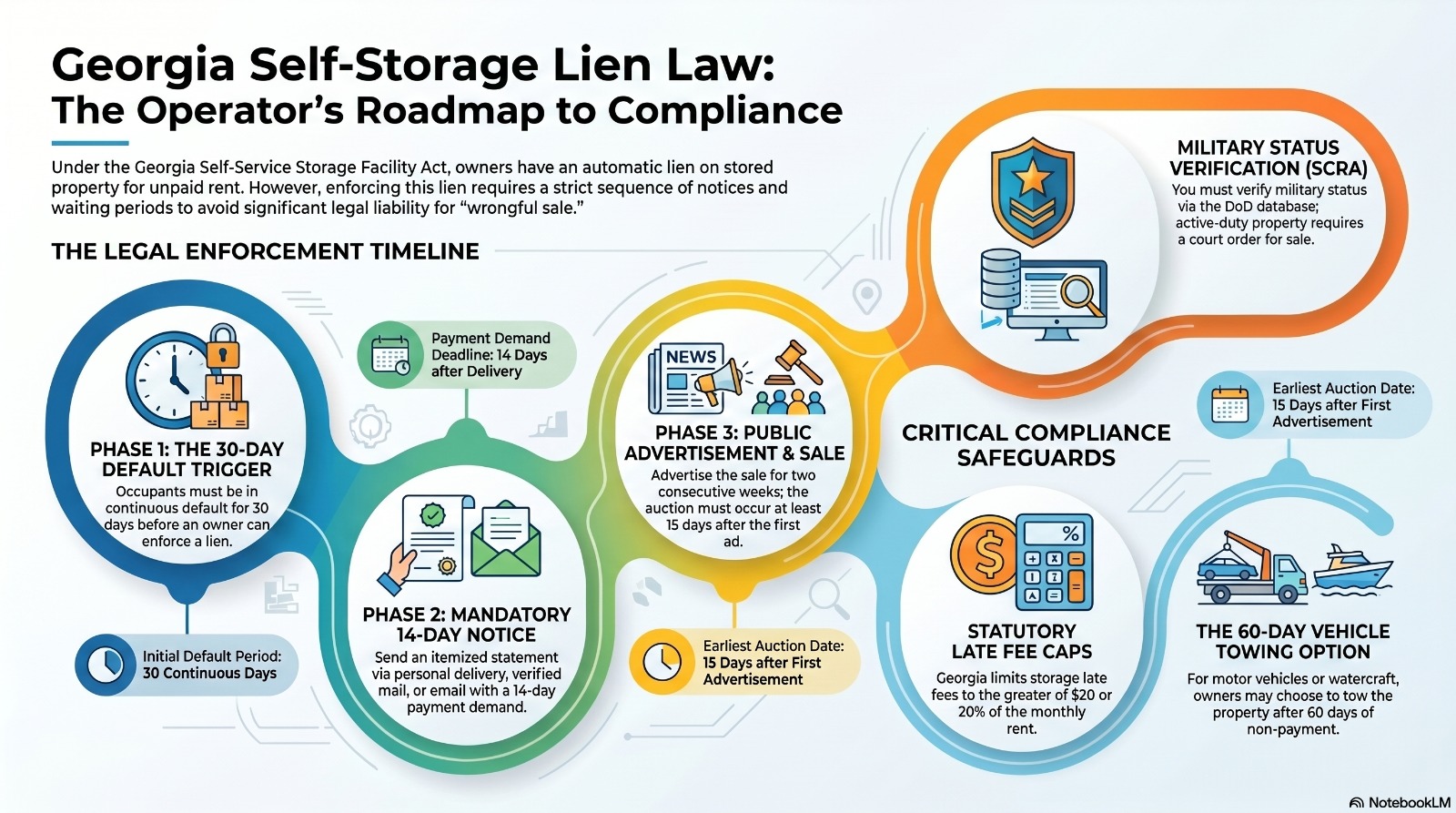
Image Blocked or Private
Please ensure public read access is enabled on your Cloudflare R2 bucket settings.
Georgia Eviction Timeline
Official Compliance Roadmap
Account
Settlement
Pay your outstanding balance instantly.
Make a Payment
By paying your balance in full, you can legally halt the eviction or auction process immediately.
Secure CheckoutDisclaimer: Partial payments may be accepted by management, but under GA law, they do not automatically waive the landlord's right to continue eviction or lien enforcement.